Editorial independence: our scores and rankings are produced using the fixed criteria above and are not influenced by advertisers. This is an independent ranking site and is not operated by, or affiliated with, any provider we list.
Affiliate disclosure: some links on this page may earn us a commission at no extra cost to you. This does not affect our rankings.
Live market data via CoinGecko, for informational purposes only. Not financial advice.
| Best for | Not for |
|---|---|
| Established Argentine and Latin American market presence | Spreads may be less competitive than large global exchanges |
Criteria Breakdown
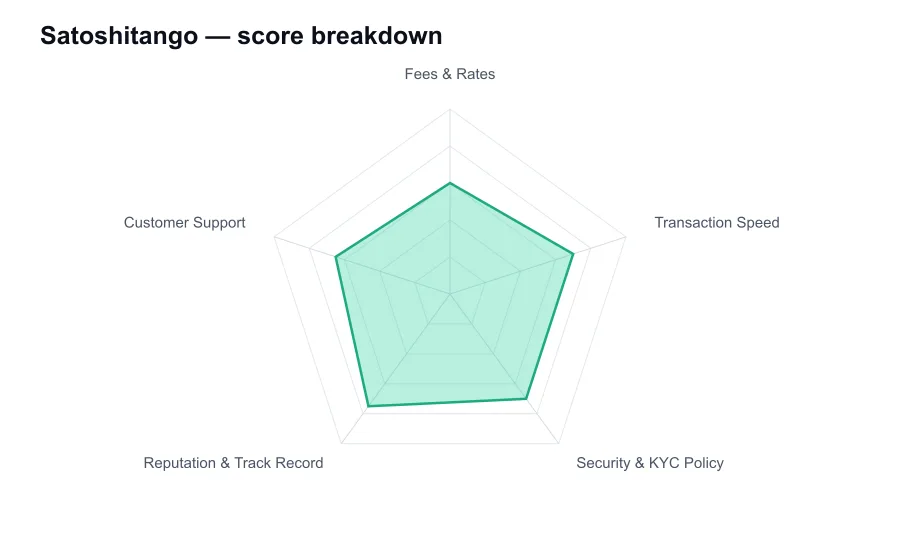
| Criterion | Score | Notes |
|---|---|---|
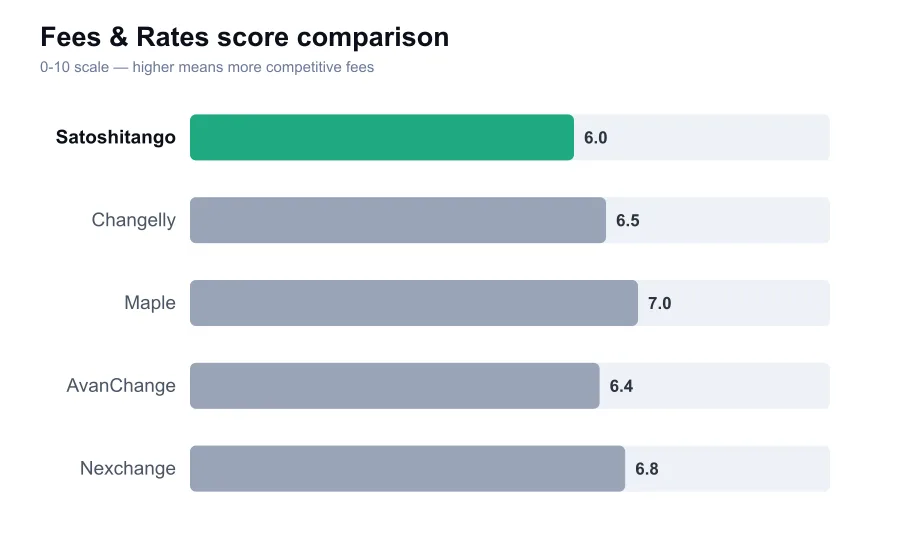
| Fees & Rates | 6.0 | Convenient local access, but spreads can exceed global exchange costs |
| Transaction Speed | 7.0 | Local transfers are practical, blockchain timing still applies |
| Security & KYC Policy | 7.0 | KYC and custodial controls, with normal exchange counterparty risk |
| Reputation & Track Record | 7.5 | Established name in Argentina and Latin America |
| Customer Support | 6.5 | Useful local-facing support, but delays can occur during peaks |
In-Depth Review
SatoshiTango is one of the better-known crypto platforms serving Argentina and other parts of Latin America. It sits closer to a local retail exchange and payment-oriented crypto service than to a global high-liquidity trading venue such as Binance, Coinbase, or Kraken. Its appeal is practical: users can buy, sell, hold, and transfer common cryptocurrencies while dealing in familiar local payment methods and currencies. For an Argentine customer, that local orientation can matter more than a long list of exotic tokens.
The platform has operated through several difficult periods for Argentina's financial system, including currency controls, high inflation, shifting rules, and intense demand for dollar-linked alternatives. That history gives SatoshiTango more credibility than a brand that arrived during a bull market and disappeared when trading cooled. It has had time to build recognition, though longevity alone should never be mistaken for a guarantee against operational or market risk.
Its product set is aimed at accessibility. Users can typically access major assets such as Bitcoin, Ether, stablecoins, and selected altcoins, alongside local-currency purchase and withdrawal options. That makes it more approachable than a self-custody-only service for someone taking their first steps into crypto. The downside is that the experience is designed around convenience, not the deep liquidity, advanced order controls, or broad derivatives catalogue that active traders expect elsewhere.
Fees are not SatoshiTango's strongest selling point. As with many regional brokers, the visible trading fee is only part of the cost. The quoted buy and sell price can include a spread, and payment method or withdrawal choices can alter the effective rate. A user making a simple purchase may find the process straightforward, but should compare the final amount received against another local provider rather than relying on a headline percentage.
This is particularly important in Argentina, where a small percentage difference can matter a great deal when users are repeatedly moving between pesos, stablecoins, and bank balances. The cheapest route is not always the most obvious one. Bank transfer funding may be more economical than card-based purchases, while network withdrawals can vary sharply depending on whether the user selects Bitcoin, Ethereum, Tron, or another supported rail. Read the confirmation screen before committing.
For a modest retail transaction, SatoshiTango is usually quick enough. Local deposits and transfers can be processed promptly when banking rails are operating normally, and internal account updates are generally much faster than a blockchain withdrawal. But crypto withdrawals remain dependent on the selected network and the exchange's own security checks. A Bitcoin transaction may take far longer than a USDT transfer on a lower-cost network, and a newly added withdrawal address may trigger extra review.
That extra friction can be annoying, but it is not automatically a bad sign. Exchanges that process withdrawals instantly without meaningful controls often pay for that convenience later. The real standard is consistency and communication. If a withdrawal is delayed, users deserve a clear status explanation and a realistic timeframe. Regional platforms often struggle here during periods of market stress, when support queues rise precisely as customers become most anxious.
SatoshiTango requires identity verification for meaningful use of its services. That is expected from a platform handling fiat rails and operating in increasingly regulated Latin American markets. Users should expect to provide personal information and documentation, and in some cases answer questions tied to transaction limits or source of funds. Privacy-first users will dislike that, but there is no honest way to offer reliable bank integration while pretending compliance checks do not exist.
The security model is custodial, which means users are trusting SatoshiTango to secure private keys, control employee access, monitor suspicious activity, and maintain adequate reserves and operational discipline. That is a very different risk profile from holding assets in a personal wallet. Two-factor authentication and a unique password are essential, but they do not eliminate counterparty risk. Long-term holdings should not sit on any exchange merely because selling them later might be convenient.
I would like to see more detailed public transparency from regional platforms generally, including clearer custody arrangements, incident reporting, and independently verifiable reserve information. SatoshiTango benefits from its operating history, but it does not have the level of public corporate disclosure that a large listed financial company would provide. Users should judge it as a local crypto business, not as a fully transparent bank substitute.
The platform's reputation is strongest among users who value local relevance. It understands the Argentine market better than many global exchanges do, especially around peso access and common customer expectations. Its reputation is less compelling for professional traders who care about order-book depth, API tooling, derivatives, and globally competitive spreads. That is not necessarily a failure. It simply means SatoshiTango has a narrower job than the giants of the industry.
Customer support is a meaningful part of that job because local users often need help with transfers, verification, and bank-related issues rather than just a forgotten password. SatoshiTango has support channels and educational material, but customers should not assume instant resolution during volatile markets or public holidays. Before depositing a large amount, test the process with a small transfer. The quality of support is easiest to judge before you urgently need it.
For users buying stablecoins or major cryptocurrencies with local funds, SatoshiTango can be a sensible bridge into the market. It is easier to recommend for practical purchases and withdrawals than for high-frequency trading. The platform is likely to feel familiar to someone who wants an Argentine-facing service, while a trader accustomed to Binance's depth or Kraken's order controls may quickly find it restrictive.
My take is that SatoshiTango earns respect for durability and local usefulness, not for being the cheapest or most sophisticated venue. It can be a reasonable regulated gateway for users who understand custodial risk, compare the all-in quote, and move long-term holdings to self-custody. I would not choose it as my primary venue for large speculative trading activity. I would choose it when local rails and a straightforward peso-to-crypto path matter more than shaving every last basis point off execution.
Pros & Cons
| Pros | Cons |
|---|
Does SatoshiTango require identity verification?
Yes. Users should expect KYC checks because the platform supports fiat-linked services and operates in regulated markets. Verification requirements and transaction limits can vary by account and jurisdiction.
Are SatoshiTango fees low?
The effective cost can include both displayed fees and the difference between the buy and sell quote. Compare the final quote, funding method, and withdrawal charge with alternatives before placing a larger order.
Is SatoshiTango suitable for long-term crypto storage?
It can be convenient for temporary holdings, but it is a custodial service. Users holding meaningful long-term amounts should consider withdrawing to a wallet where they control the private keys.