Editorial independence: our scores and rankings are produced using the fixed criteria above and are not influenced by advertisers. This is an independent ranking site and is not operated by, or affiliated with, any provider we list.
Affiliate disclosure: some links on this page may earn us a commission at no extra cost to you. This does not affect our rankings.
Live market data via CoinGecko, for informational purposes only. Not financial advice.
| Best for | Not for |
|---|---|
| Purpose-built ETH-backed borrowing | ETH-only focus limits flexibility |
Criteria Breakdown
| Criterion | Score | Notes |
|---|---|---|
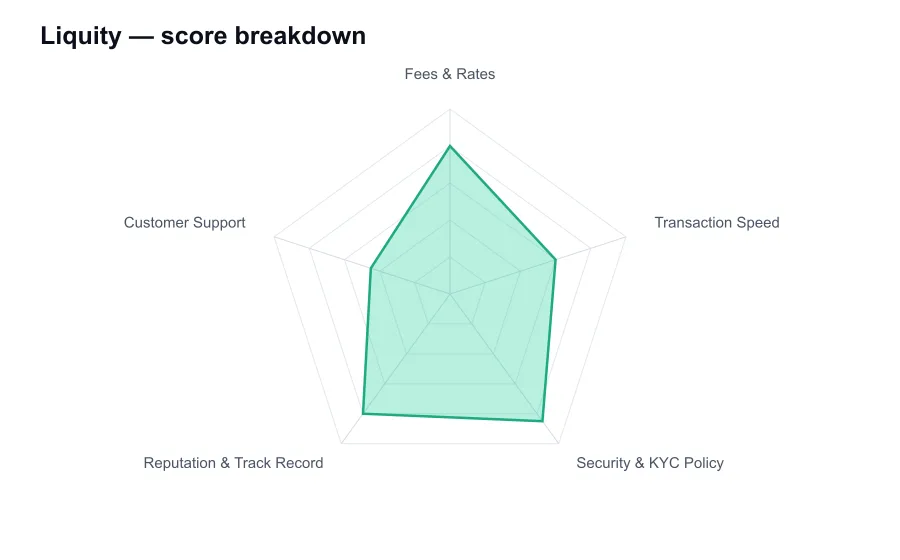
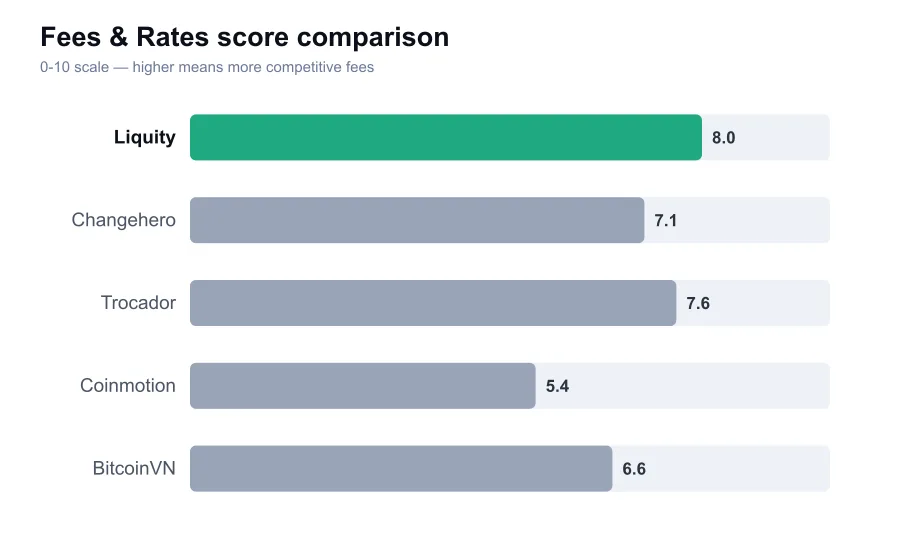
| Fees & Rates | 8.0 | No recurring interest in the original model, but upfront fees apply |
| Transaction Speed | 6.0 | Settlement depends on Ethereum confirmation and gas conditions |
| Security & KYC Policy | 8.5 | Minimal, audited, immutable design with years of use |
| Reputation & Track Record | 8.0 | Highly regarded ETH-backed stablecoin protocol since 2021 |
| Customer Support | 4.5 | Strong documentation, but no personal account support |
In-Depth Review
Liquity is one of DeFi's most distinctive borrowing protocols. Its original Ethereum product lets users deposit ETH as collateral and borrow the LUSD stablecoin without paying recurring interest in the traditional lending-market sense. That simple design made Liquity a favorite among users who wanted long-term ETH-backed liquidity without constantly watching a variable borrow APY.
The original system is deliberately narrow. You do not deposit a wide menu of tokens, and you do not borrow whatever asset happens to be popular. The classic Liquity protocol is built around ETH collateral, LUSD debt, Troves, a Stability Pool, and liquidations. That lack of variety is not a flaw. It is a security and risk-management choice, and it gives the product a clarity that many sprawling lending protocols lack.
The familiar headline is zero-interest borrowing, but users should not interpret that as free money. Opening or increasing a Trove carries a one-time borrowing fee that is algorithmically set and historically has a floor of 0.5 percent, rising with redemption activity. You also pay Ethereum gas. For a borrower who keeps a position open for months, this can be much cheaper than a variable-rate loan. For someone borrowing briefly, the upfront fee can be less appealing.
Liquity's original minimum collateral ratio is 110 percent, which is aggressive compared with many lending platforms. A user can borrow more against ETH than they might at a conservative protocol, but the trade-off is obvious: a relatively small fall in ETH can push an undercollateralized Trove into liquidation. Borrowing near the maximum is not prudent just because the interface permits it.
The protocol's liquidation design is one of its best ideas. LUSD deposited in the Stability Pool is used to cancel debt from liquidated Troves. In exchange, Stability Pool depositors receive the liquidated ETH collateral, typically at a discount after the liquidation mechanics. This creates a direct mechanism for maintaining solvency, but it is not a risk-free yield account. Depositors can see their LUSD balance decline during liquidations and receive ETH instead.
Redemptions are another essential but often misunderstood part of Liquity. LUSD holders can redeem LUSD for ETH against Troves with the lowest collateral ratios. This mechanism helps keep LUSD close to its dollar target, but it can reduce a borrower's debt and collateral position at inconvenient moments. It is a feature of the system, not an error, and users should understand it before opening a Trove.
Speed is conventional Ethereum speed. Liquity does not have an offchain matching engine, and its actions are settled onchain. In normal conditions, a transaction may confirm within a minute or two, but gas prices and block conditions can change that. During sharp ETH moves, waiting for a transaction can be stressful, particularly if you need to add collateral to avoid liquidation. This is not a product for users who expect instant customer-service intervention.
Liquity's security model benefits from minimalism. The original protocol was designed to be immutable, with no conventional governance process changing parameters at will after deployment. Its contracts underwent audits and have been heavily scrutinized by the Ethereum DeFi community. Immutability reduces governance risk, but it also means a discovered design issue cannot be patched in the same easy way a centrally managed application can be updated.
That security philosophy is a major reason Liquity has an unusually strong reputation among technically minded DeFi users. It launched in 2021 and has weathered volatile market periods while preserving the core LUSD mechanism. It has not become as dominant in total value locked as MakerDAO or Aave, partly because it offers fewer collateral options and a narrower product range. But within its lane, it is respected.
The protocol's newer Liquity V2 direction changes part of the story. V2 introduces BOLD, a new stablecoin architecture with user-set interest rates and more flexible borrowing mechanics, rather than simply repeating the original LUSD model. That development is interesting, but users must not confuse the two systems. Product versions can have different fees, collateral rules, interfaces, and risk assumptions.
There is no platform KYC in the normal self-custody flow. A user connects an Ethereum wallet, signs transactions, and remains responsible for private keys and approvals. This makes Liquity accessible to users who do not want a centralized borrower profile, but it also means nobody can reset access or reverse an onchain error. The protocol is permissionless, not protective.
Customer support is appropriately limited. Documentation and community resources can help explain Troves, redemptions, and liquidation behavior. They cannot change the outcome of an executed liquidation. Anybody promising to recover funds through a direct message should be assumed to be a scammer. Liquity's lack of a helpdesk may frustrate retail users, but it is consistent with a protocol that has no custody of user accounts.
The real decision is whether you want predictable borrowing economics or broader flexibility. Aave can offer more assets, more chains, and more active liquidity markets. Maker and Spark offer their own stablecoin ecosystem and lending routes. Liquity is the cleaner choice if your collateral is ETH and you value a purpose-built system, but it is not the platform to use if you need to borrow against an eclectic token portfolio.
I like Liquity because it has a coherent thesis and does not bury it under unnecessary features. Its zero-interest legacy borrowing model is genuinely useful for the right ETH holder, and its liquidation architecture is elegant. Still, the 110 percent minimum collateral ratio can tempt users into dangerous positions, and Ethereum gas remains a practical drag. Liquity rewards conservative borrowers who understand the mechanics, not people chasing the maximum number on the borrow screen.
Pros & Cons
| Pros | Cons |
|---|
Is Liquity borrowing really interest-free?
The original LUSD system does not charge a recurring interest rate, but borrowing involves a one-time fee and Ethereum gas costs. Newer Liquity products can use different fee structures.
What happens if my Trove is liquidated?
If your collateral ratio falls below the required threshold, your debt can be canceled through the liquidation mechanism and your collateral is used according to protocol rules.
Does Liquity require KYC?
No routine KYC is required to use Liquity directly with a self-custody wallet. You remain responsible for wallet security and local compliance.